Backend & Frameworks
Primary stack across nine-plus years of enterprise Java delivery — from Spring MVC-era monoliths through Spring Boot microservices on Java 21.
Learn more →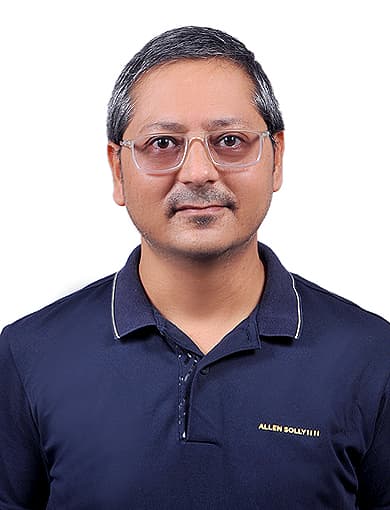
Senior Java Engineering Leader · 17+ years
Sanjay Singh Bhandari
I design and build the backend systems organizations depend on — authentication that holds up across every client deployment, trading systems engineered not to go down, and financial systems underneath it all. 17+ years doing that in Java, now extending the same discipline into AI-powered products.
Impact Dashboard
A CTO-level summary: verified scale, domains, technology, and outcomes — no filler, no unverified claims.
Primary stack across nine-plus years of enterprise Java delivery — from Spring MVC-era monoliths through Spring Boot microservices on Java 21.
Learn more →Event-driven and data-layer technologies used in production trading and platform systems, including the Enterprise Exchange Platform.
Learn more →I led the design and rollout of an OAuth2-based authentication and authorization system across multiple production client deployments.
Learn more →CI/CD strategy, containerization, and cloud deployment ownership — defining pipelines rather than just using them.
Learn more →Applying LLM-based tooling and retrieval-augmented generation to real, shipped resume/hiring products — see the AI Engineering page for specifics.
Learn more →During the last five years at Opal BPM, I mentored a team of 5–7 developers and drove architecture/code-review standards — see the Leadership page for the practices behind each of these.
Learn more →4 cross-cutting architectural themes drawn directly from the case studies — service decomposition, event-driven consistency, identity/trust boundaries, and individual ownership inside team-scale systems.
Learn more →Languages
Frameworks & Libraries
Cloud & Infrastructure
Messaging & Async
Databases
Containers & Orchestration
CI/CD & Build
Security & Identity
AI Engineering
Payments
I architected two production platforms from the ground up at Opal BPM: the 16-microservice Enterprise Exchange Platform and the company's core Artwork Management Platform.
See the case study →I designed the Kafka-based order-to-settlement event flow behind a multi-tenant trading platform running in production at 99.9% uptime, with notification delivery under 100ms.
See the case study →I led the design and rollout of a standardized OAuth2 authentication and authorization model across multiple independent client deployments.
See the case study →I built an RFC 1.2.0-compliant Beckn adapter ("WRI Connector") integrating 5+ identity-verification providers behind one interface, at sub-50ms P95 latency.
See the case study →I took direct ownership of production issue triage for InterGlobe's financial systems, reducing mean time to resolution by 30%.
See the case study →I joined Opal BPM as a Senior Java Developer and progressed into Lead Java Developer; during the last five years of my nearly 10-year tenure, I mentored a team of 5–7 developers and set code-quality and system-design standards.
See the case study →Engineering Case Studies
Architecture decisions, tradeoffs accepted, and individual ownership — not a feature list.
A 16-microservice trading platform matching buyers and sellers across multi-tenant e-waste categories, run at 99.9% uptime.
An RFC 1.2.0-compliant Beckn adapter ("WRI Connector") for identity verification across multiple providers, with sub-50ms P95 latency.
A standardized OAuth2 authentication and authorization system rolled out across multiple client deployments of Opal's platform.
Leadership
During the last five years of my Opal BPM tenure, I provided technical leadership to a team of 5–7 developers after progressing from Senior Java Developer into Lead Java Developer.
Opal BPM India Pvt Ltd — technical leadership of 5–7 developers, last ~5 years of Sep 2015–Apr 2025 tenure.
See it applied in a case study →I established code-quality and system-design practices for the team as it scaled, rather than relying on ad hoc review.
I owned the architectural decisions behind the Enterprise Exchange Platform's 16-service decomposition and the Beckn Protocol Verification Adapter's state-machine design — decisions made and defended, not just implemented from a spec.
See it applied in a case study →AI Engineering